
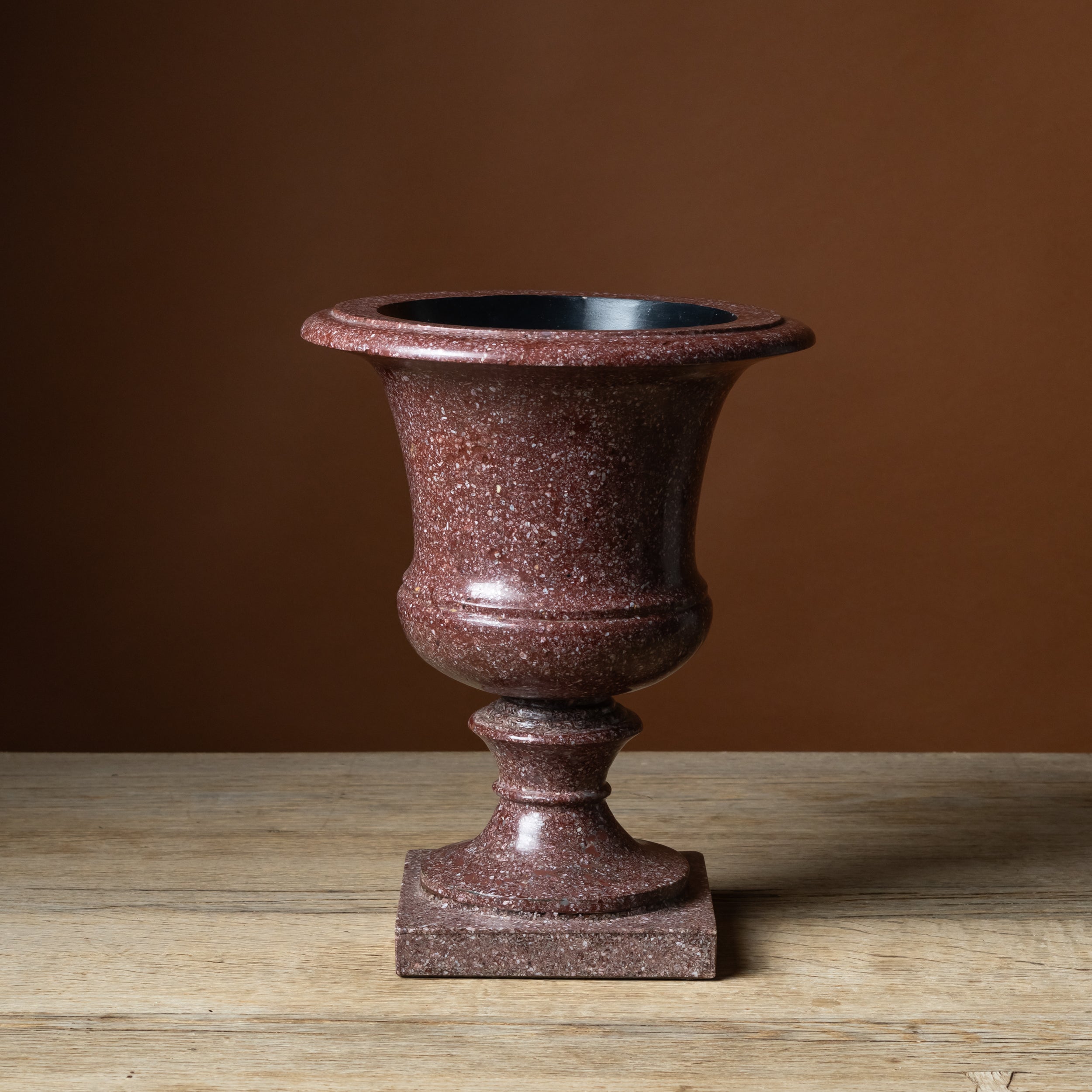
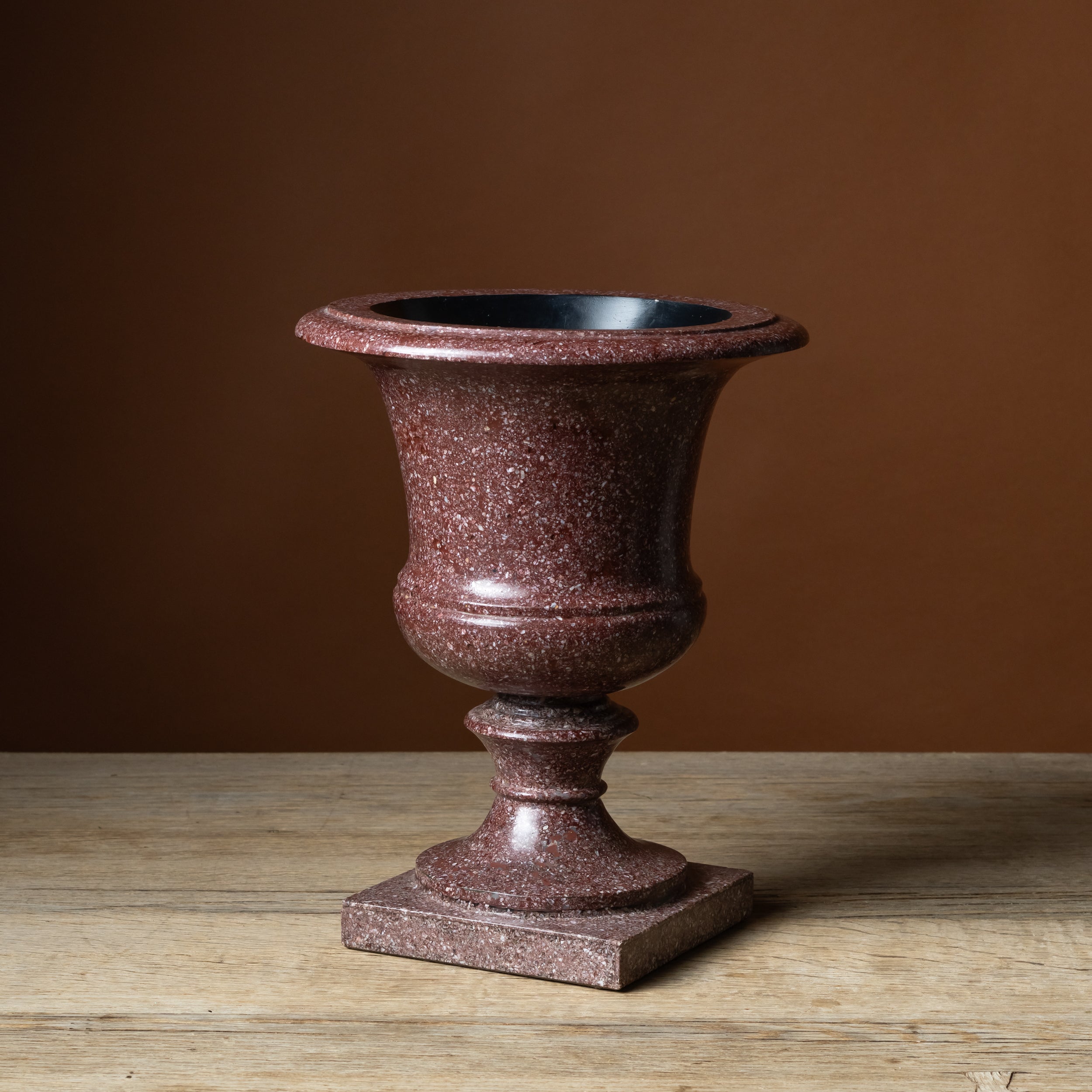

Faux Porphyry Neoclassical Campana Urn
This painted urn is made in the style of late 18th–early 19th-century neoclassical models, drawing on the classical campana form with an everted rim and square base. The deep red, finely speckled finish is intended to evoke porphyry, a material long associated with power, permanence, and imperial taste.
Porphyry held particular significance in Northern Europe during the Gustavian period, when Swedish neoclassicism looked to antiquity for restraint, symmetry, and intellectual rigor. Objects of this form recall the urns produced for palaces and stately interiors, where they functioned as architectural accents rather than utilitarian vessels. The proportions and silhouette reflect the neoclassical revival’s fascination with Roman precedent and archaeological clarity, as seen in late 18th-century architectural drawings and decorative arts.
Maker: Unknown
Era: 20th century
Materials: Carved red stone (porphyry-style)
Dimensions: Available upon request
Style: Neoclassical
Choose options